

Color Blindness Solutions
Color blindness doesn't have to limit what you see. At Edge Optics, our specialized lenses can help you experience richer, more vibrant color.
Color blindness, clinically called color vision deficiency (CVD), describes a range of conditions where the eye and brain perceive colors differently because one or more photoreceptor types are absent or function atypically. Current research shows that CVD most commonly affects color discrimination along red–green axes and that prevalence and daily impacts vary by sex, genetics, and acquired factors.
At Edge Optics, we understand how color blindness can affect daily activities, learning, and overall visual comfort. Our experienced eye care team offers thorough color vision testing, personalized guidance, and solutions like color-corrective lenses to help enhance contrast and improve color perception. Whether the condition is inherited or acquired, we work closely with each patient to assess their visual needs and recommend the most effective support for clearer, more confident vision.


Color Blindness Solutions in Fort Collins and Loveland



What is Color Blindness?
Understanding the Types of Color Blindness
Red-Green Color Blindness (most common)
This is the most common type and affects how you see reds and greens.
Protanomaly / Protanopia – Difficulty seeing reds. Reds may look duller or more greenish. Affects about 1–2% of males.
Deuteranomaly / Deuteranopia – Difficulty seeing greens. Greens may appear more red or brownish. The most common form, affecting about 5% of males.
Blue-Yellow Color Blindness (rare)
Tritanomaly / Tritanopia – Difficulty telling the difference between blue and yellow, or blue and green. Very rare, affecting less than 0.01% of the population.
Why does it mostly affect males?
Red-green color blindness is inherited through the X chromosome, which is why it's far more common in men than women.
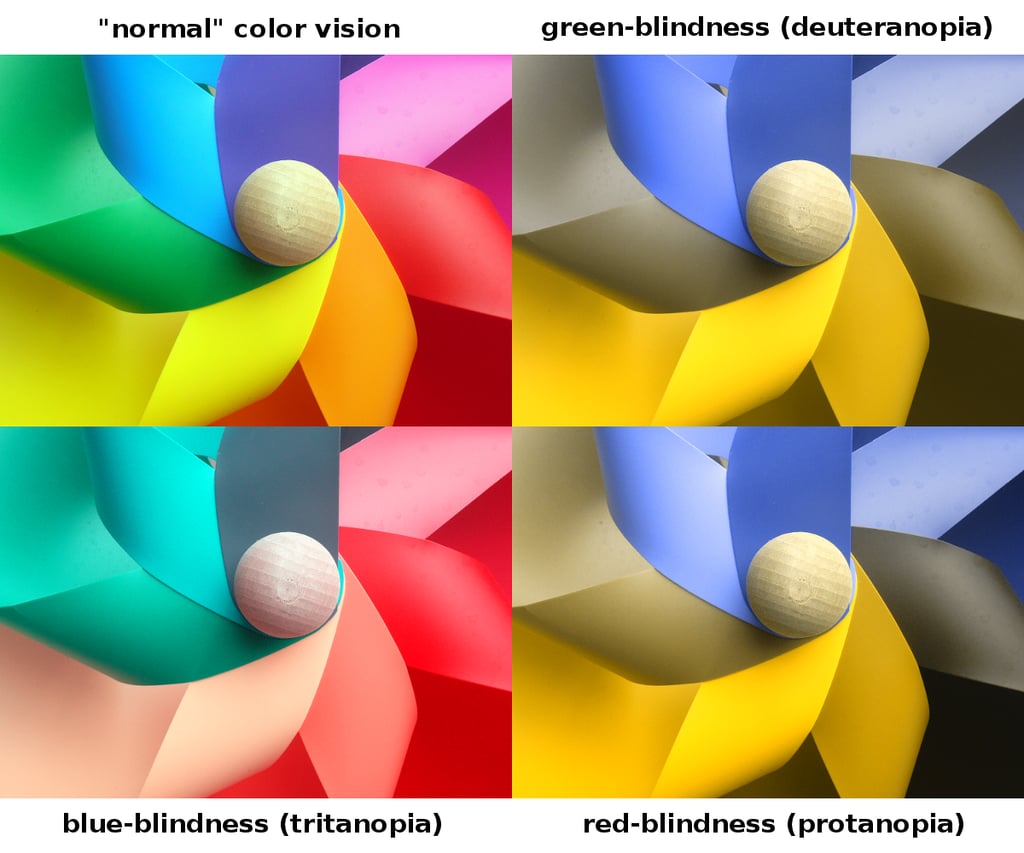
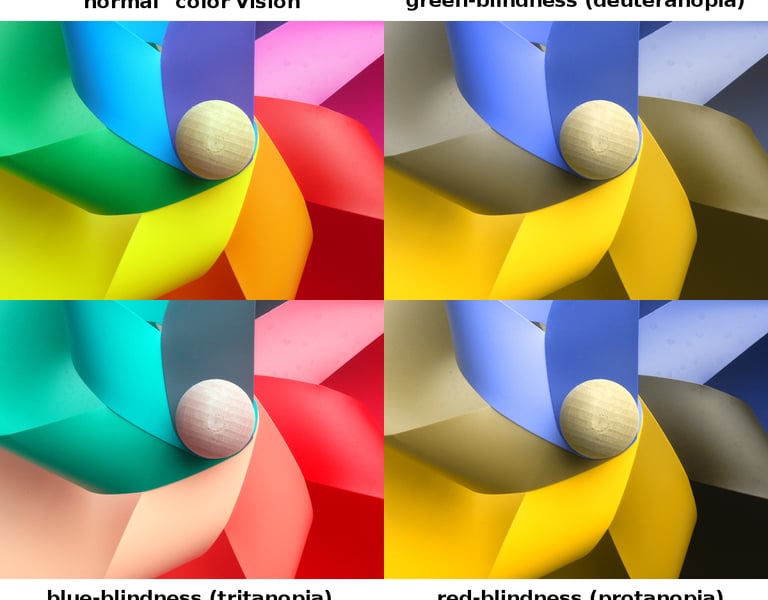
Color blindness happens when certain cells in your eyes—called cones—don't work the way they should. There are three types of cones, each responsible for detecting different colors. Depending on which cones are affected, people experience color blindness differently. It may be inherited and stable throughout life, or acquired later due to illness, injury, or medication.
What is Color Blindness?
Understanding the Types of Color Blindness
Red-Green Color Blindness (most common)
This is the most common type and affects how you see reds and greens.
Protanomaly / Protanopia – Difficulty seeing reds. Reds may look duller or more greenish. Affects about 1–2% of males.
Deuteranomaly / Deuteranopia – Difficulty seeing greens. Greens may appear more red or brownish. The most common form, affecting about 5% of males.
Blue-Yellow Color Blindness (rare)
Tritanomaly / Tritanopia – Difficulty telling the difference between blue and yellow, or blue and green. Very rare, affecting less than 0.01% of the population.
Why does it mostly affect males?
Red-green color blindness is inherited through the X chromosome, which is why it's far more common in men than women.
Color blindness happens when certain cells in your eyes—called cones—don't work the way they should. There are three types of cones, each responsible for detecting different colors. Depending on which cones are affected, people experience color blindness differently. It may be inherited and stable throughout life, or acquired later due to illness, injury, or medication.
What is Complete Color Blindness?
Complete color blindness—also called achromatopsia or monochromacy—is a rare condition where a person sees little to no color at all, usually just shades of gray.
Unlike the more common types of color blindness, complete color blindness often comes with other vision challenges, including:
Light sensitivity – Bright environments can be uncomfortable or even painful
Reduced sharpness – Vision may be blurry even with glasses
Involuntary eye movement – The eyes may move on their own (called nystagmus)
This condition is typically present from birth and affects roughly 1 in 30,000 to 50,000 people.
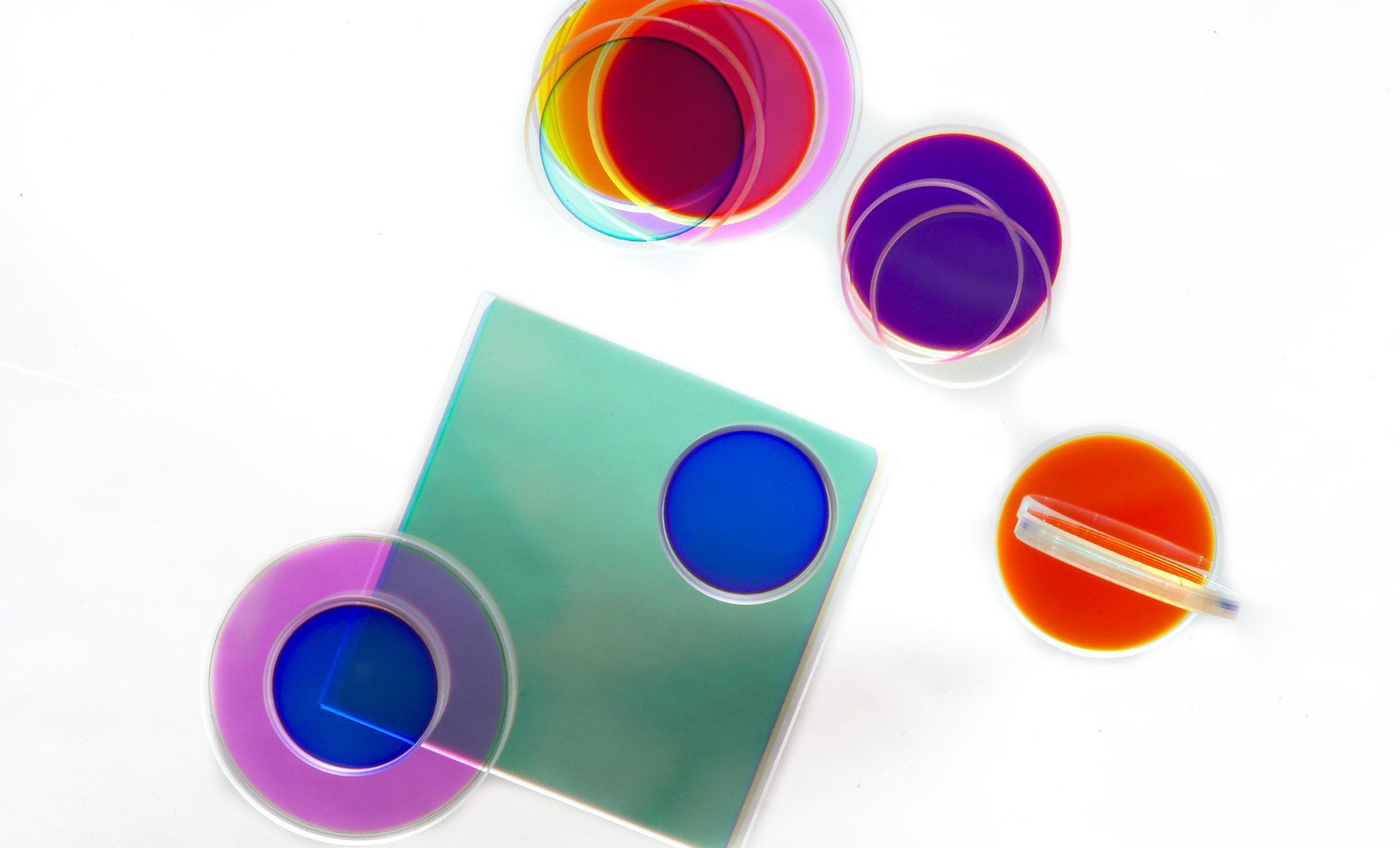
Lens Options for Color Blindness
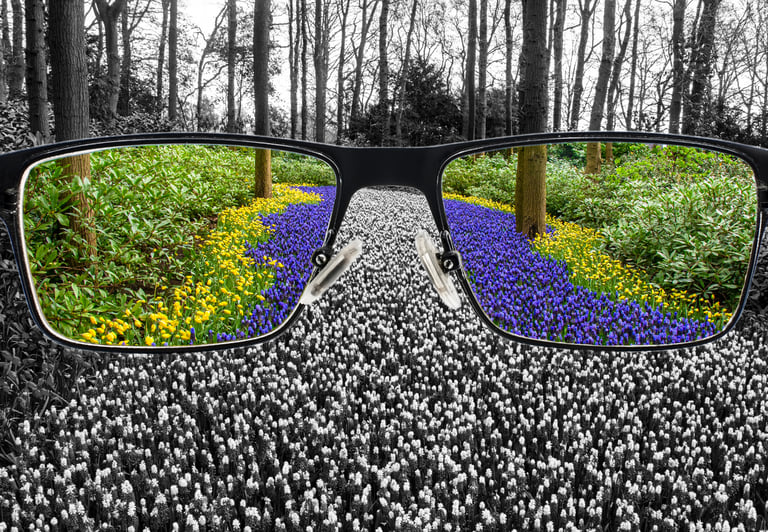
At Edge Optics, we offer specialized lenses designed to help people with color blindness see colors more vividly. These lenses work by filtering specific wavelengths of light to enhance the contrast between colors that are normally hard to tell apart.
What we offer:
Notch filter lenses – Block specific wavelengths to help separate reds from greens (or other problem colors)
Contrast-enhancing tints – Boost overall color distinction for everyday use
Prescription and non-prescription options – Available for most frame styles
What to expect:
Color blind glasses don't "cure" color blindness or change how your eyes work—but for many people, they make a noticeable difference in how colors appear. Some users see improvement right away, while others need a short adjustment period.
Why work with us?
Our team at Edge Optics can assess your specific type of color blindness and recommend the lens option that best fits your daily routine and the environments where you need the most help—whether that's work, outdoors, or everyday life.
Ready to See Color Differently?
If you or your child struggle with color blindness, you don't have to just live with it. Whether it's trouble with traffic lights, matching clothes, or seeing the full beauty of a sunset, there are solutions that can help.
At Edge Optics, we'll assess your color vision, explain your options, and help you find the right lenses for your lifestyle. Many of our patients are surprised by the difference the right glasses can make.
Curious if color blind glasses could work for you? Schedule an appointment with our team and let's explore your options together.


Ready to See Color Differently?
If you or your child struggle with color blindness, you don't have to just live with it. Whether it's trouble with traffic lights, matching clothes, or seeing the full beauty of a sunset, there are solutions that can help.
At Edge Optics, we'll assess your color vision, explain your options, and help you find the right lenses for your lifestyle. Many of our patients are surprised by the difference the right glasses can make.
Curious if color blind glasses could work for you? Schedule an appointment with our team and let's explore your options together.
Loveland
602 N Cleveland Ave
Loveland, CO 80537
CONTACT US - FORT COLLINS
Phone: (970) 682-2627
Fax: (970) 682-1835
HOURS OF OPERATION
Tuesday - Friday
9:00 am - 6:00pm
Saturday
10:00 am - 4:00 pm
Sunday & Monday
CLOSED

Fort Collins
121 Laporte Ave
Fort Collins, CO 80524
OUR LOCATIONS
HOURS OF OPERATION
Monday - Friday
9:00 am - 6:00 pm
Saturday
10:00 am - 4:00 pm
Sunday
CLOSED
CONTACT US - LOVELAND
Phone: (970) 798-3343
Fax: (970) 913-0880